National Marriage Week 2026
February 10, 2026
“A Real Song to Life”
April 30, 2026
I held my phone with one hand and wiped my tears with the other when the woman in the video raised her hands in praise, right there in her bathroom—her unrehearsed reaction to her positive pregnancy test, which she filmed and put on Facebook.
The algorithm knows me well; I’m a sucker for these reels. I cry every time, mostly tears of joy. But there’s sadness too because I wish, like the ladies in the videos, that I still knew the unbridled joy of finding two lines on a test strip.
If you’ve seen me around lately, you can tell by now that I am pregnant—with a girl, due August 8. The Tuesday before Thanksgiving, when we found out we’re expecting, believe me, there was joy. But something else came tethered to it: fear.
That’s because this is my third pregnancy. And if you’ve ever seen me, you know I don’t have children in tow (other than my godson, Leo!). Due to miscarriage, Nick’s and my other children, Gabriela Joan and David Abel, are in Heaven.

My life isn’t quite the same as it was before our losses. Neither is being pregnant.
Your heart pounds when you receive the results of your first hCG blood draw. It pounds even harder when you receive the second round’s results, because if hCG drops, you know a loss is coming.
There’s a sigh of relief when it more than doubles. But you don’t get to breathe another sigh of relief until weeks later, when you see a raspberry-sized baby and its heartbeat on the screen during a sonogram.
Your next sigh of relief is weeks after that, at your first OB appointment, when you hear (and not just see) the baby’s heartbeat. Each passing sigh of relief is deeper for me than the last. But when you’re pregnant after loss, you know from experience that you don’t always get the sigh of relief.
Also after loss, the normal things people say to pregnant women don’t land the same.
“How do you feel?” they ask.
You want to say “terrified.” But you stick with a more comfortable truth: “nauseated.”
“That’s a good sign!” they respond.
I thought so, too. But I had morning sickness leading up to the day I learned David was gone (and three more weeks of morning sickness while we waited for my body to realize).
In pregnancy after loss, it’s easy to question any sensation you feel, to distract yourself from your own intuition for fear of what it might tell you, and to worry about what it means when you haven’t had a symptom someone else who’s pregnant has. If you’re not careful, you catch yourself asking ChatGPT what’s normal in pregnancy more often than you ask God to sustain the little life inside you.
When you’re pregnant after loss, you carry so much in addition to the baby. And so many of us have been through it.
One in four women has experienced miscarriage, and about 1% of women have had two or more miscarriages in a row, according to The Lancet.
That means that just because this is the first time you’ve seen an acquaintance with a baby bump doesn’t mean this is the first time your acquaintance has been pregnant.
It means women (and men) all around us are grieving losses we don’t even know about.
But God grieves our losses with us.
He is with us when the test results arrive, and when we’re doing deep breaths in waiting rooms.
He is with us when we are desperate for any sign of life inside us, even a kick to the ribs.
The way he holds us while we hold all this is, I imagine, not unlike the way he holds the babies we’ve lost.
He does it with a gentleness that we will probably always need.
Written by Arleen Spenceley Babino.
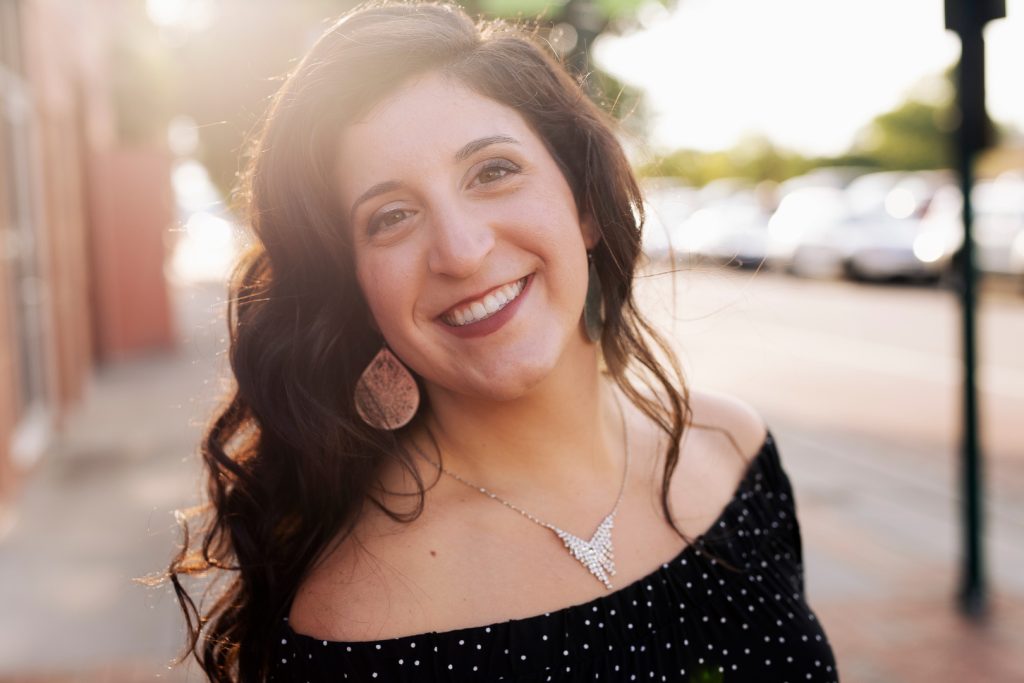
~Arleen is the author of Chastity is for Lovers: Single, Happy, and (Still) a Virgin (Ave Maria Press) and is the coordinator of pastoral ministry and outreach at St Frances Cabrini Parish in Spring Hill, Florida.
March is Pregnancy After Loss Awareness Month. If you have experienced a loss of a child at any age, support is available at redbird.love. Additional resources are available by contacting St Gianna Center for more information on Restorative Reproductive Medicine and NaProTechnology. We’d be honored to journey with you.